
Introduction
Who I Am

For those new here, I am Jack Huang, an American who hailed from a small sleepy Midwestern city on a gorgeous lake (Lake Michigan), where I acquired a taste for technology, physics, and finance. Perhaps like Sal Khan (of Khan Academy), I should write things of interest to my younger self down for the benefit of my youngest cousin - still in high school - and incidentally the rest of you in pragmatic, Hemingway-style prose.

Fig. 1. My hometown at night (Source: author).
A thorough Midwesterner, I spent a few formative years in the cornfields of Aurora, a small rural town with little claim to fame except for its role in high frequency trading (HFT) for finance folks. That is because of a data center there for the Chicago Mercantile Exchange (CME), an exchange for (financial) futures - you hear about it on Bloomberg in the news because of a recent outage. I won’t comment on the veracity of the book Flash Boys (by Michael Lewis), but if you have any quantitative training, you can do some back of envelope calculations on your own to check. That said, Alexander Pilosov (of Shortwave Solutions) recommended me this blog Sniper in Mahwah & Friends for understanding HFT and Chicago Booth professor Eric Budish also quantified the HFT arms race in this paper. Incidentally, I have also visited a server room of the headquarters of a HFT firm then based in Chicago - that was the first time I started to develop a budding appreciation for optics in telecom and data com contexts.
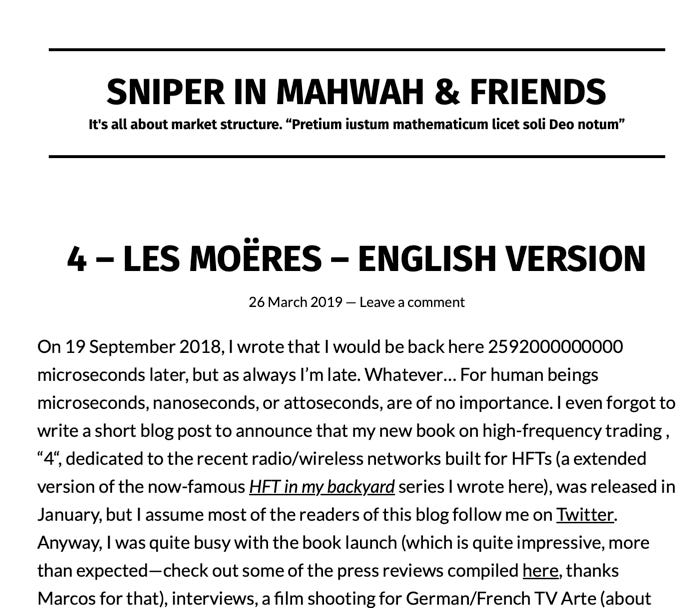
Fig. 2. HFT blog, recommended to me by Alexander Pilosov. (Source: Sniper in Mahwah & Friends).
Next, I spent quite a few happy years reading classics critically and daydreaming about light (i.e., electromagnetic radiation) at an academically serious but still cosmopolitan place called University of Chicago. Whether it was a local trench, dome-shaped library, or chapel bell tower, all my younger self could think of was how light could be guided like in an optical fiber (invented by Hong Konger Charles Kao 高錕), bent like in a periscope (curiously missing in a captured U-boat sitting in now Griffins Museum of Science and Industry, and present in an old submarine in Charleston) or telescope (in an old Wisconsin observatory), or trapped in a leaky cavity. To be certain, two special classmates of mine instilled a deep appreciation for a pragmatic worldview - do you truly understand the theory if you have never applied it before (王守仁的知行合一)?
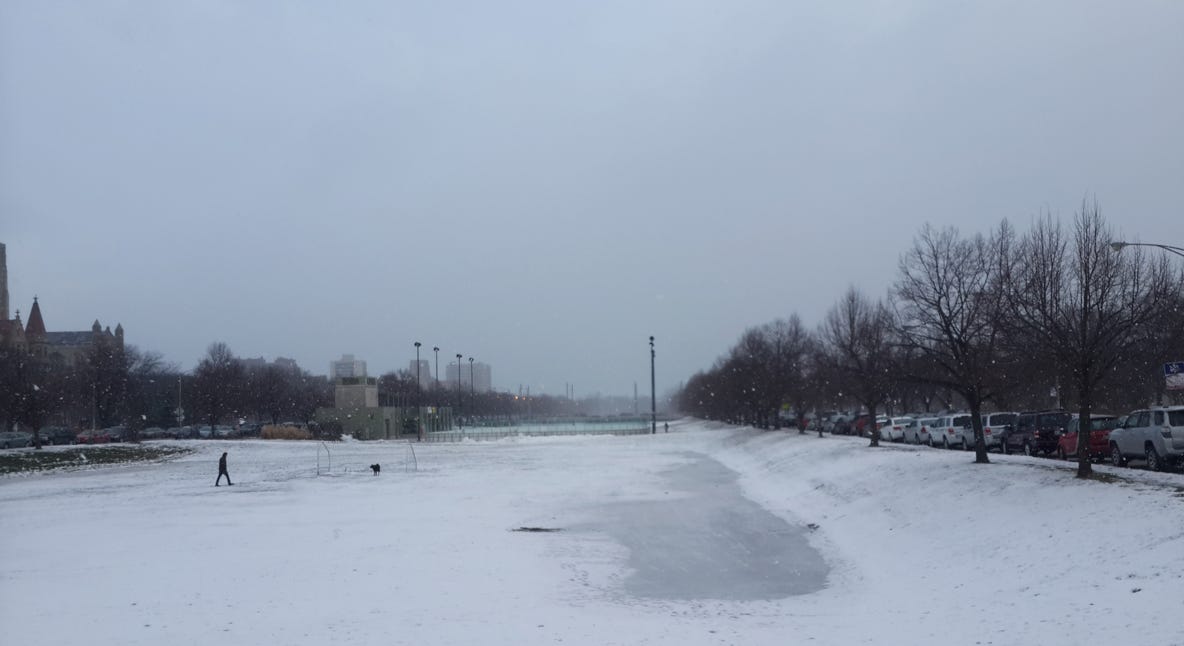
Fig. 2. Local trench, incidentally part of the site of an old World’s Fair, evoking the physical principle of fiber optics (Source: author).
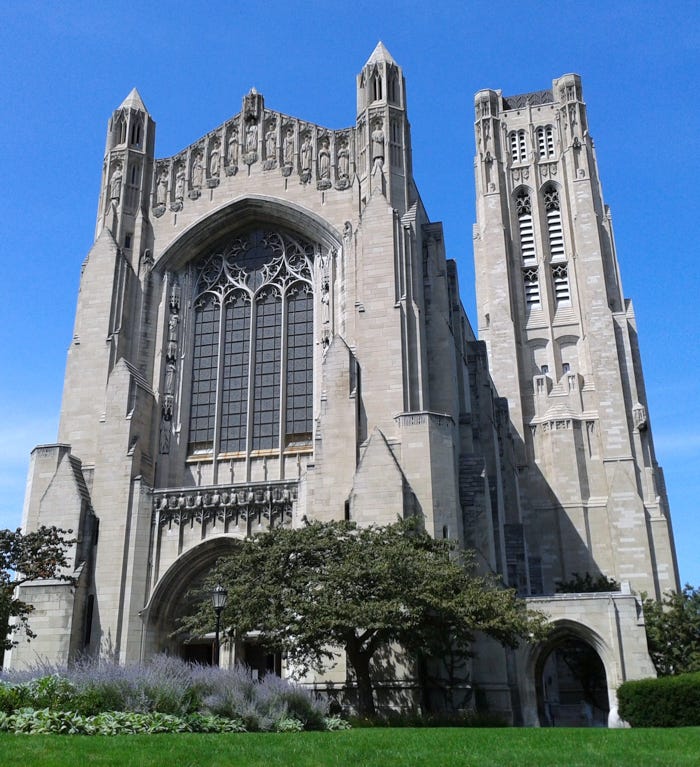
Fig. 3. Iconic local building with a bell tower, evoking the theory of quasi normal modes (Source: author).
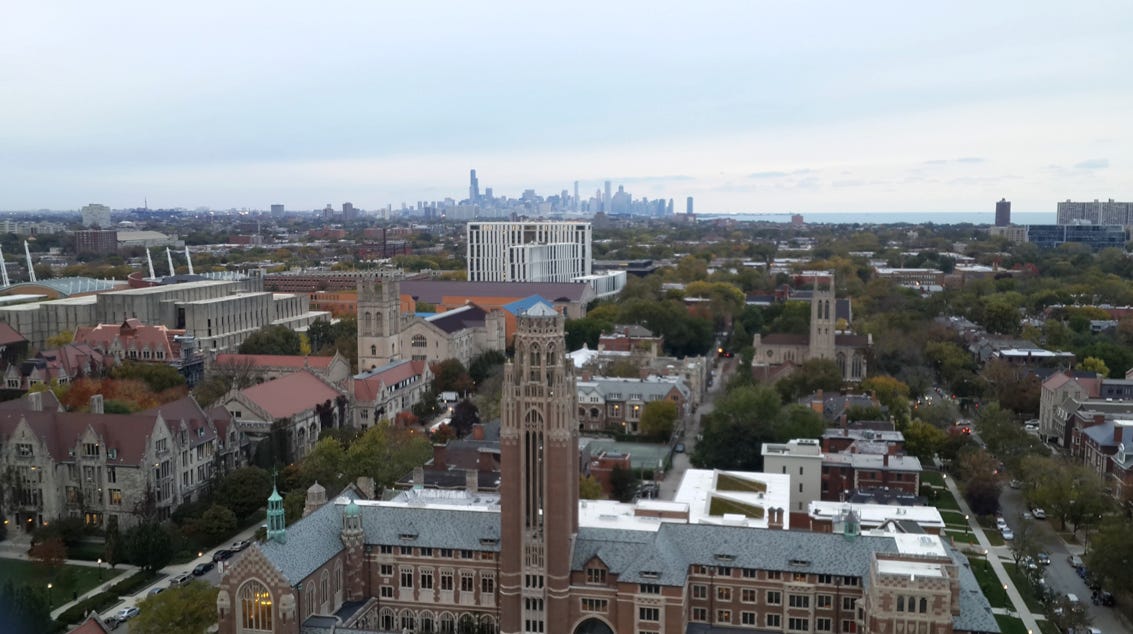
Fig. 3. Skyline of my hometown and the lake when viewed from the top of the said bell tower - I studied mathematics at the lower left building (incidentally one of the old buildings for the Metallurgical Lab of Manhattan Project during WW2) and enjoyed the daily ringing bells (Source: author).
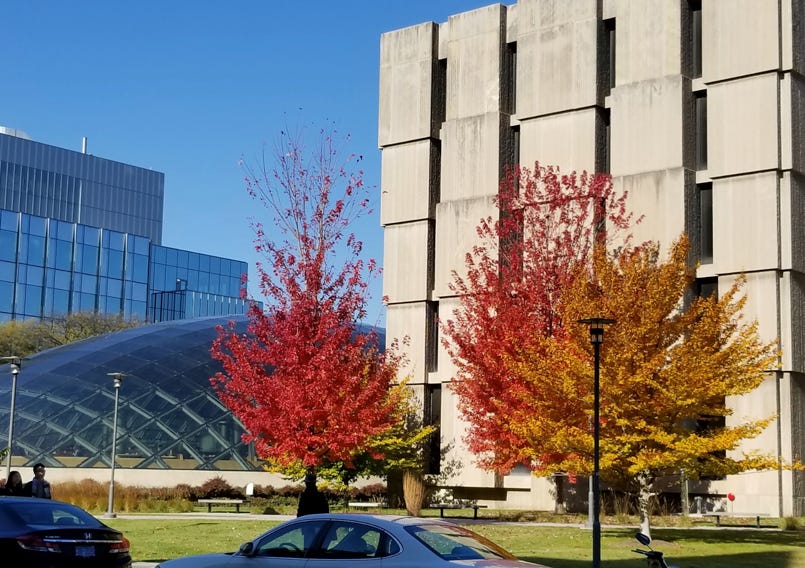
Fig. 4. Iconic dome shaped glass library, evoking the geodesics for light (Source: author).

Fig. 5. U-505 submarine (Source: Griffins Museum of Science and Industry).
Thus, I had the good fortune of coming under the influences of two one-of-a-kind (einmalig) classmates among my family and friends from Chicago days - friend A [redacted] and friend B wong tong hok (i.e., classmate Wong, as I would call her only by her last name out of fear). The former, a computer science and economics major, taught me what it took to assemble a gaming personal computer (yes, we played video games and Nvidia GPUs were viewed only as gaming cards back then) in our undergraduate dormitory - mind you, this was in the mid 2010s long before the current artificial intelligence boom - by procuring parts such as memory and graphics processing processors (GPUs) with specific ones suggested on PCPartPicker. That was the first time when I started to appreciate the global nature, market dynamics, and value add of the electronics supply chain, much of which is in East and Southeast Asia. Obviously, it didn’t make much financial sense to do it this way for most people who should just buy off the shelf, but we would derive pride and deeper appreciation for what it took to do something if we did it from scratch. In practice, you almost never get to build anything truly from scratch - “I, Pencil” of Leonard Read fame and the pin factory of Adam Smith fame don’t really make sense in a globalized supply chain with far finer specialization. On that note, I recommend checking out Brian Potter’s book The Origins of Efficiency and blog Construction Physics. The latter, classmate Wong, would insist on using proper Chinese with me as our lingua franca even though she was perfectly bilingual, and always breaking down even the most complex business models and value chains into the simplest terms with me, echoing the salient points in the Acquired podcast I would listen to in the future. To some extent, she evoked a certain fictional polymath protagonist wong jung (黃蓉). As a consequence, not only did I acquire a lifelong taste for reading classical Chinese poetry such as ngok joeng lau gei (岳陽樓記) and philosophy at particularly scenic places (Lake Michigan or Charles River is objectively far better than dung ting wu 洞庭湖), but also modern ethnic Chinese business and technology leaders like Morris Chang (張忠謀). No serious technologist today should be illiterate in Chinese, as that is the lingua franca in Taiwan and some parts of Southeast Asia.
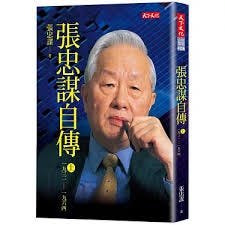
Fig. 6. Cover of autobiography of Morris Chang - Vol. I 1931-1964, packed with insights of American society and technology largely forgotten for a millennial American like me (Source: 張忠謀自傳:上冊一九三一—一九六四).
Of course, I have had the pleasure to learn far more from other peers and intellectuals, but those two were particularly dear to me intellectually. For instance, my fellow classmate Lucas Cusimano proselytized me into viewing financial portfolios through the lens of factors. Here are two accessible books on finance I would recommend to my youngest cousin and thus all of you - Asset Management: A Systematic Approach to Factor Investing (by Andrew Ang formerly at Blackrock), and Expected Returns: An Investor’s Guide to Harvesting Market Rewards (by Antti Ilmanen at AQR). No, reading books alone won’t make you rich, but actively compounding the key lessons in these books and investing in your own human capital can go a long way. For lack of a better metaphor, it took the protagonists in gam jung (金庸) martial arts novels many decades to become the top at their crafts. Next, my old teaching assistant Wei-han Hsiao instilled in me a lifelong appreciation for “spherical cow” models, especially in the context of electromagnetism, and Taiwanese culture. My old friend and roommate [redacted] would debate all the finer nuances of the word “doch” in German with me and rave about the Rhineland, evoking my imagination from reading Heinrich Heine’s “The Lorelei”.
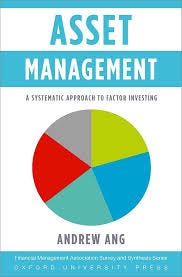
Fig 7. Very introductory book on portfolio management with an accessible framework for thinking about your personal portfolio too (Source: Amazon).
Since then, I have had stints trading equity volatility (VIX) and rates futures (z.B., Bunds Futures) at Transmarket Group (TMG) - a proprietary trading company based in Chicago - and designing and simulating electronic-photonic chips at Cadence Design Systems (Cadence) - an electronic design automation company based in San Jose. Well, I won’t say much more than that. A friend Lucas Pauker who still works at TMG still maintained a cool blog on AI and trading from his Stanford days, and Cadence is a publicly traded company that Jensen Huang (of Nvidia) often raved about, most recently at Consumer Electronics Show (CES 2026).
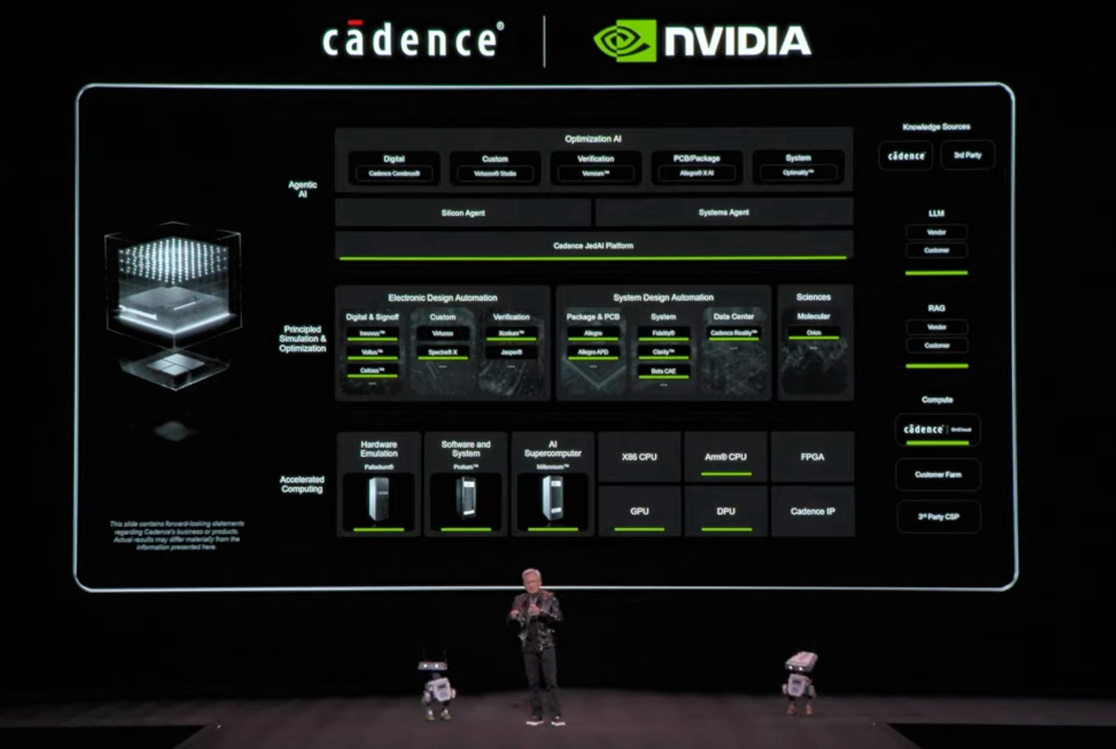
Fig. 8. Cadence-Nvidia stack from CES 2026 (Source: Nvidia).
Lately, in the past few years, thanks to the influences of friends like Quentin Wach (very aptly named software engineer working at gdsfactory with an excellent blog on AI and applied physics and “woke” me up to their promises with a hint of the artistic flair befitting a Quentin), Cheryl Wu (a budding Yale economist who wrote about the economics of AI from time to time in her blog Great Divergence), and Wentao Jiang (人如其名,文韜武略- another aptly named polymath, applied physicist, and AI engineer who has an excellent blog on all technical things Outside Five Sigma) all over the world, I have been embracing the use of artificial intelligence (AI) tools and leveraging them throughout every aspect of my life whenever possible - perhaps I will write about it too. Beyond a certain point, this blog may end up becoming one on “what AI can do for you, and what you can do for AI”, to deliberately misquote one of my favorite presidents JFK, namesake of the NYC airport.
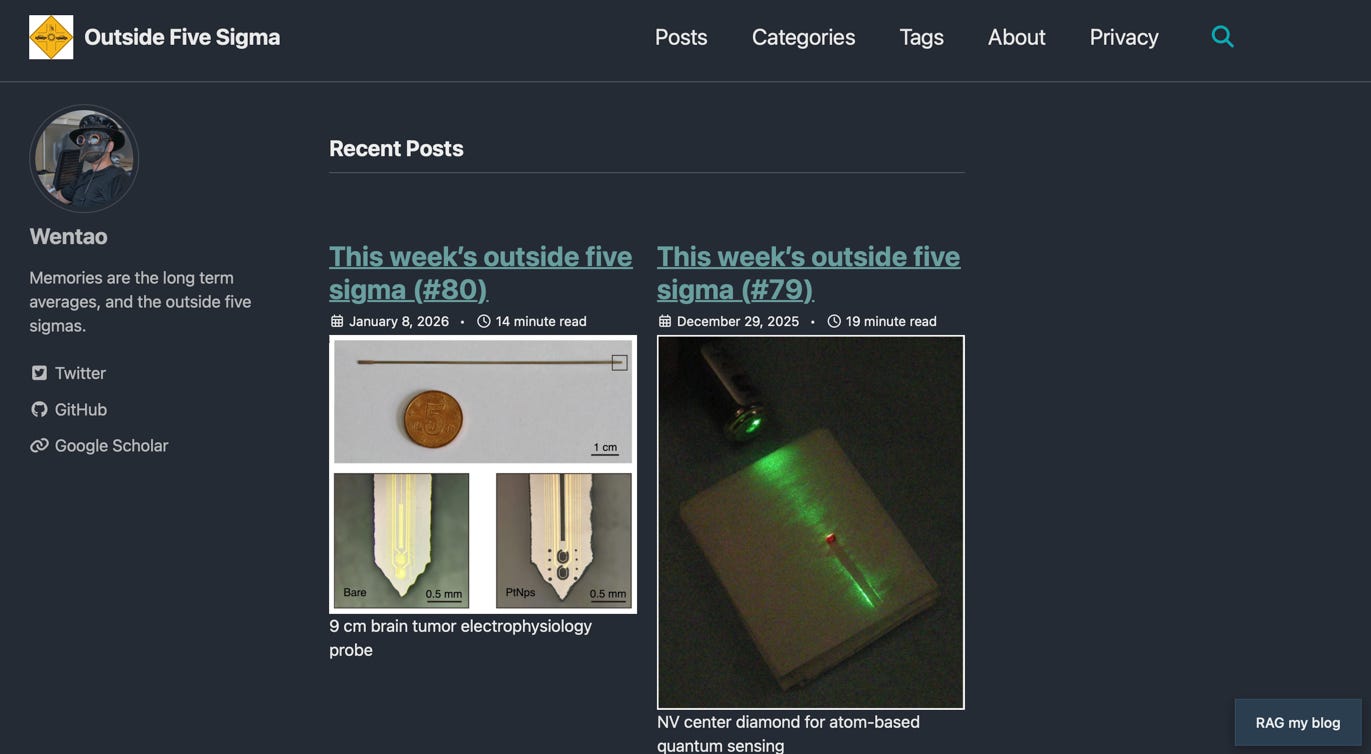
Fig 8. Technical blog of friend Wentao Jiang (Source: Outside Five Sigma).
To round it out, I will like to call out to other friends who inspire me with knowledge in all the finer things in life. When Lucas Grosjean (another applied physicist and engineer active in the open source software community) was not talking to me about copackaged optics or integrated photonics, he was educating me in what fine French food looked and tasted like. As with all other areas, even if I know the first principles (or recipes), it will take me a while to learn how to cook French food properly through learning-by-doing. In the distant future, I will write more on this topic, pending high yields (fraction of edible items over all cooked items).
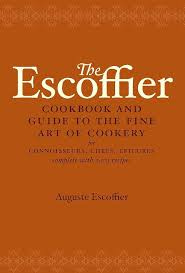
Fig. 9. The Escoffier Cookbook, recommended to me by Lucas Grosjean (Source: Amazon).
Shortly, I will be writing a technology and finance themed newsletter with Omer Cheema called “Eternally Paranoid” named after the book “Only The Paranoid Survives” by Andrew Grove. The first posts will be on co-packaged optics (CPO), which you may have heard of if you listened to Jensen Huang during GTC 2025 or CES 2026.
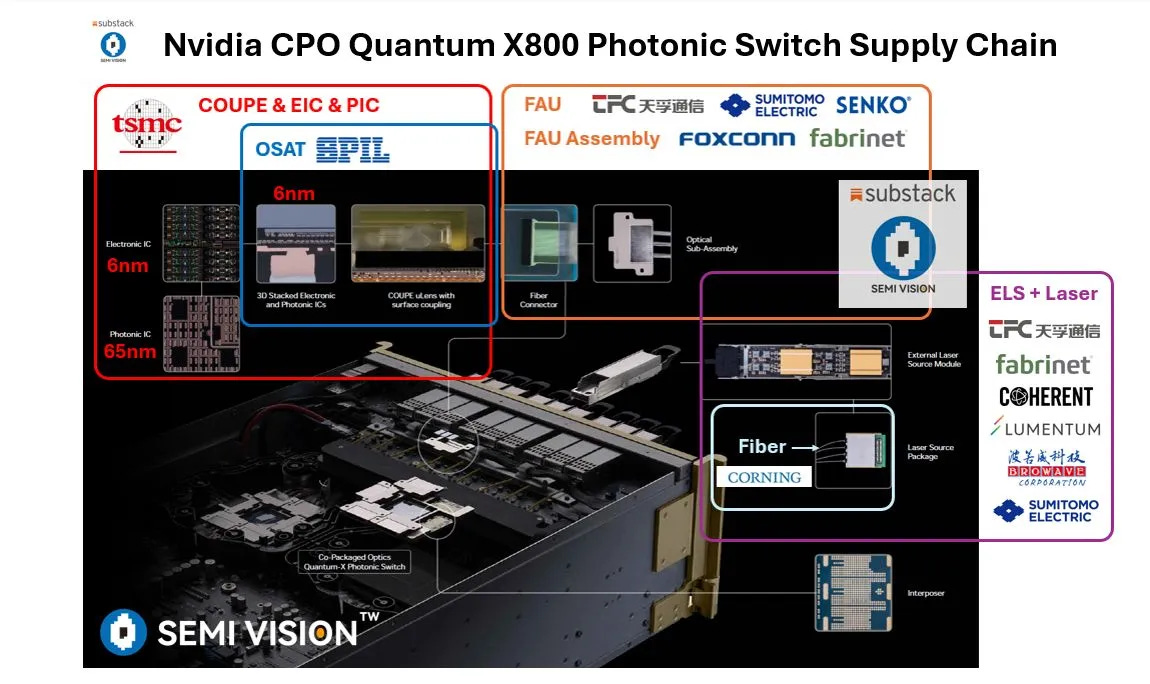
Fig 10. Components and component vendors of a commercial copackaged optics system (Source: Semivision, Nvidia).
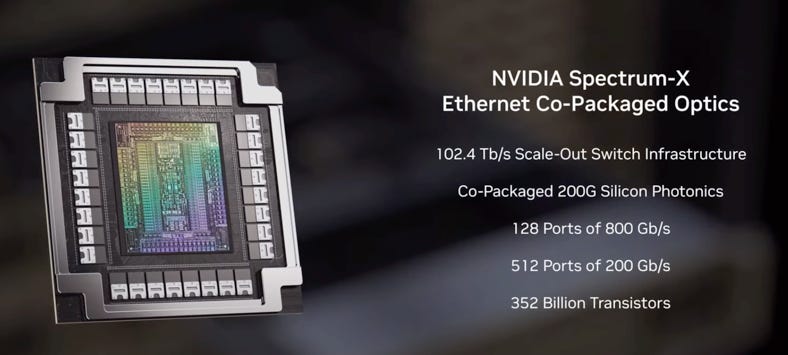
Fig 11. Spectrum X Ethernet CPO product announcement from CES 2026 Jensen Huang keynote talk (Source: Nvidia).
Stay tuned for future posts! I hope you never need to use a large language model (LLM) to understand my posts. I am always happy to talk about technical matters only within my circles of competence with like-minded people - feel free to reach out if you are one. Hope they resonate with you.
Thanks for your support.
-JH(/BH/傑克)
Thanks for the mention!! 😁😁 nice article, I feel I know you more now as well!